


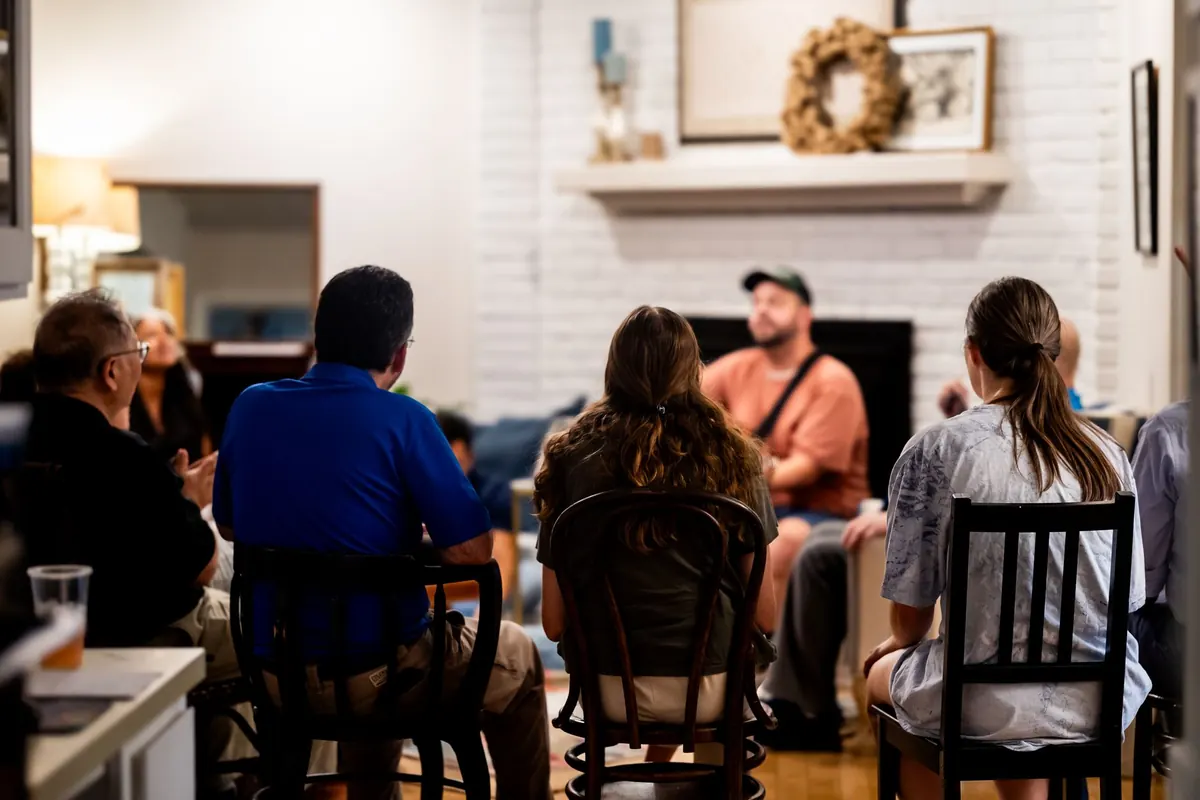


The first block gathering is not a festival. It is a test of a simple idea: that the people who live within sight of one another might enjoy standing in the same driveway for an hour or two. Plan for that modest goal, and the event has a much better chance of happening. Overreach—a stage, a caterer, a permit application for a street closure you do not need—and the whole thing can stall before the first invitation goes out.
Choose a scale that fits your block
A first gathering works best when it is short, local, and easy to leave. Aim for two hours on a Saturday afternoon, in a front yard, driveway, or small park within walking distance. Fifteen to thirty people is plenty. That is enough to feel like a gathering and small enough that one person can host without turning the weekend into a production.
Ask one or two neighbors to co-host before you set a date. A co-host can share costs, knock on doors, and make decisions with you. Pick a date that avoids known conflicts: school events, religious holidays, a big local festival, or a week when the street will be full of construction. Have a rain plan that is not “we will see.” A pop-up canopy in a driveway, a community room, or a simple postponement date is enough.
Think about the mix of people on your block. If there are retirees, young families, renters, and long-time owners, choose a time when strollers and walkers can both reach the spot. A 2 p.m. start often works better than 5 p.m. because it does not collide with dinner or bedtime. The best first gathering is short enough that people do not need to rearrange their whole weekend. If it goes well, the second one can be longer.
Set a small budget before you promise anything
Write down the few things you will actually pay for before you buy anything. A potluck keeps costs low, but the host usually ends up covering a few basics. A simple budget of $30 to $75 is normal for a driveway potluck if the host provides paper goods, water, and a main dish. Borrow tables and chairs rather than renting them. Keep the list short and specific:
- Food and drinks: a main dish or two from the host, plus water, lemonade, and a clear potluck sign-up.
- Paper goods and cleanup: plates, cups, napkins, trash bags, and a couple of damp cloths.
- Simple signage: a welcome sign, name tags, and a marker.
- Activities: sidewalk chalk, bubbles, a borrowed lawn game, or a craft that does not need supervision.
- A small contingency for the thing you forgot.
If you ask neighbors to contribute money, say exactly what it covers and make the contribution optional. Never make a neighbor feel turned away for not paying. For a first gathering, shared expenses are usually simpler than a formal collection. If the budget grows beyond a few shared costs, keep a simple record and be transparent about what was spent. Post the receipt for group supplies if people contributed. For anything involving insurance, public space, or larger sums, check with local officials and, where appropriate, a qualified adviser.
Check permits and the quiet rules early
Rules vary widely from one town to the next. Many places require a permit for closing a street, using a public park, setting up a bounce house, playing amplified music, or serving alcohol. Some do not. The only way to know is to ask your local office. Start with the parks and recreation department, the city or town clerk, or the police non-emergency line. Ask specifically about street closures, public space, noise, alcohol, signs, and insurance. Write down the name of the person you spoke with and the date. If the answer is no, scale back rather than argue. A five-minute phone call now can save a cancellation later.
If your plan is a driveway potluck with no street closure, no amplified sound, and no alcohol sales, you may need nothing at all. Still, tell close neighbors what you are planning and when. A short note that says “we expect a little extra noise from 2 to 4 p.m.” prevents a lot of irritation. If you plan to serve alcohol, close a street, or use a public space, stop and confirm the requirements with your local office. This is general guidance, not legal advice.
Invitations that make it easy to say yes
Use more than one channel. A paper flyer works for people who are not in the group chat. A neighborhood messaging group reaches people quickly. A door-to-door invitation works best for the households you have never met. Deliver flyers a week to ten days ahead, then send a short reminder two days before. Ask one neighbor who knows the building or the block well to help reach people who are not online.
A good invitation answers six questions:
- What is it? “A bring-a-dish block gathering,” not just “get together.”
- When does it start and end? Give both times.
- Where exactly? Name the driveway, yard, or park entrance.
- What should I bring? Be specific: a chair, a dish to share, or nothing at all.
- What happens if it rains? Name the backup plan.
- Who do I contact? Include a phone number or email for questions about access, food, or noise.
“Come to a bring-a-dish block gathering on Saturday, May 18, 2–4 p.m., at 14 Maple Court, in the driveway. Bring a chair and a dish to share if you can; come anyway if you cannot. Rain plan: same time under the carport. Questions: Alex, 555-0102.”
Add a line about accessibility if you can: seating, shade, a quiet corner, or a step-free route. You do not need a formal survey. A simple “let us know if you need a chair or a quieter spot” is enough.
Day-of roles: one job per person
Do not try to run everything yourself. Give each volunteer one clear job and a specific time to do it. Write the roles on a single sheet of paper and keep it near the food table.
- Setup lead: tables, chairs, shade, signage, and the first trash bag.
- Greeter: welcomes people, hands out name tags, and introduces neighbors who do not know each other.
- Food table captain: keeps serving utensils moving, labels dishes, and makes sure water is visible.
- Activity host: sets out chalk or a game and keeps an eye on the kids’ area.
- Cleanup lead: assigns trash and recycling, wipes tables, and checks for lost items.
- Accessibility point person: knows where the step-free entrance is, keeps a chair and water near the greeting table, and can point guests to a quieter corner.
A simple run of show keeps the host from drifting. An example: 1:30 setup; 2:00 welcome and name tags; 2:15 food opens; 2:45 optional introduction circle with thirty seconds per person; 3:15 activity or free social time; 3:45 cleanup announcement; 4:00 thank-you and close. The welcome should be sixty seconds, not a speech. Say what the gathering is, where the bathroom is, and when cleanup starts. A visible schedule near the food table helps volunteers know what comes next.
Make introductions easy
Most first gatherings fail socially not because of food but because people stand in clusters. Name tags with first names and “I live at…” help. A greeter can make one introduction every few minutes, which takes less courage than asking people to introduce themselves to the whole group. Use a simple prompt: “What is one thing you can see from your front window?” or “How long have you been on the block?” Avoid forcing games or long speeches. A neighborhood map on a clipboard where people mark their house is a low-pressure icebreaker and useful afterward. For families, a chalk area and bubbles give kids something to do and adults time to talk. Keep the prompts optional and brief.
After the gathering: follow up while it is fresh
Send a short thank-you within a few days. Mention one specific thing that worked, ask for one suggestion, and share the next step if there is one. Keep a simple contact list only if people opt in; do not add neighbors to a group chat without permission. Note what you borrowed, what you spent, and what you would change. If the first gathering felt good, plan a second one for the same time next season. The goal is not a perfect event. It is a small habit of neighborliness that can be repeated.
Photo: Helena Lopes / Pexels